What a CIPA demand letter means
A CIPA demand letter claims pixels, chat, or session replay broke California law. Learn Sections 631 and 638.51, the SB 690 change, and which records to keep.
A CIPA demand letter claims pixels, chat, or session replay broke California law. Learn Sections 631 and 638.51, the SB 690 change, and which records to keep.
A growing category of website demand letters focuses on privacy and tracking technology. These claims generally allege that a website collected or shared visitor information through pixels, analytics platforms, chat tools, session replay software, or other third-party technologies without appropriate authorization. Law firm Fisher Phillips tracks these cases in its wiretapping litigation map, which covers digital wiretapping claims filed since May 2022.
When California privacy and wiretapping laws are involved, the demand letter may reference the California Invasion of Privacy Act (CIPA). Businesses don’t have to be physically located in California for CIPA to apply to them.
Key takeaways
A CIPA demand letter generally claims that technology operating on a website collected or transmitted visitor information in a way that violated California law.
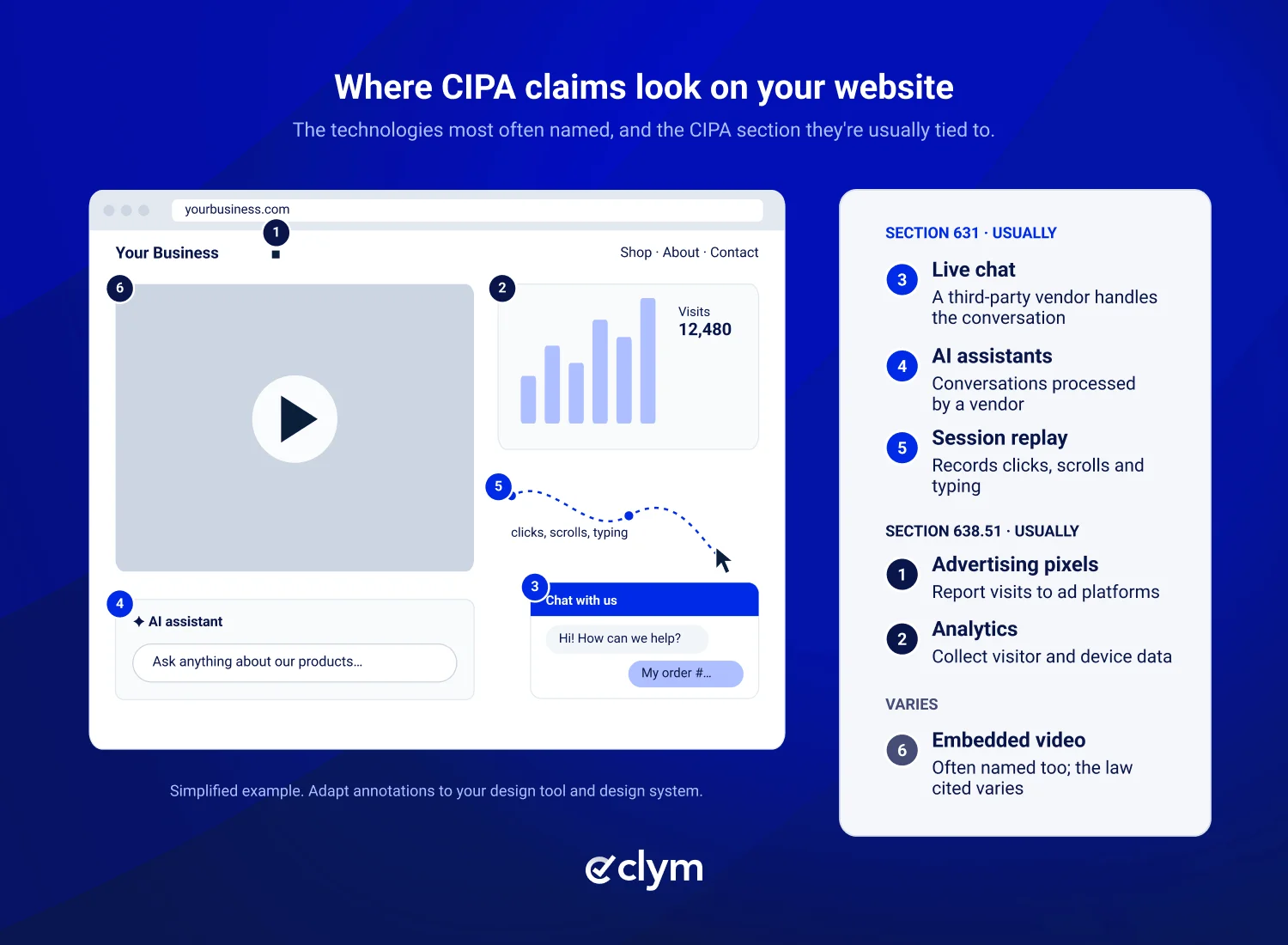
These letters may identify technologies such as:
Businesses outside California can also receive CIPA-related claims. Plaintiffs may argue that the law applies when a California resident interacts with a website, even if the company operating the site is located elsewhere, and some courts have been sympathetic to that claim..
How the law applies can depend on the facts and jurisdiction, so legal counsel should review the specific allegation. These claims can carry real financial exposure. These claims can carry real financial exposure. Under California Penal Code section 637.2, a person can seek $5,000 per violation, or three times actual damages if that is higher. That's why many CIPA demand letters generally open with a settlement figure.
The section cited in the demand letter can clue you into the type of claim.
Claims involving Section 631 often focus on technologies such as chat tools or session replay.
The allegation is generally that these chat tools involve a third party that improperly intercepted or accessed communications between a website and its visitor.
Claims involving Section 638.51 commonly focus on pixels, analytics, or technologies that allegedly collect information used to identify or track a visitor or device.
Understanding which section is cited can help legal and technical teams narrow the investigation.
Update for 2027
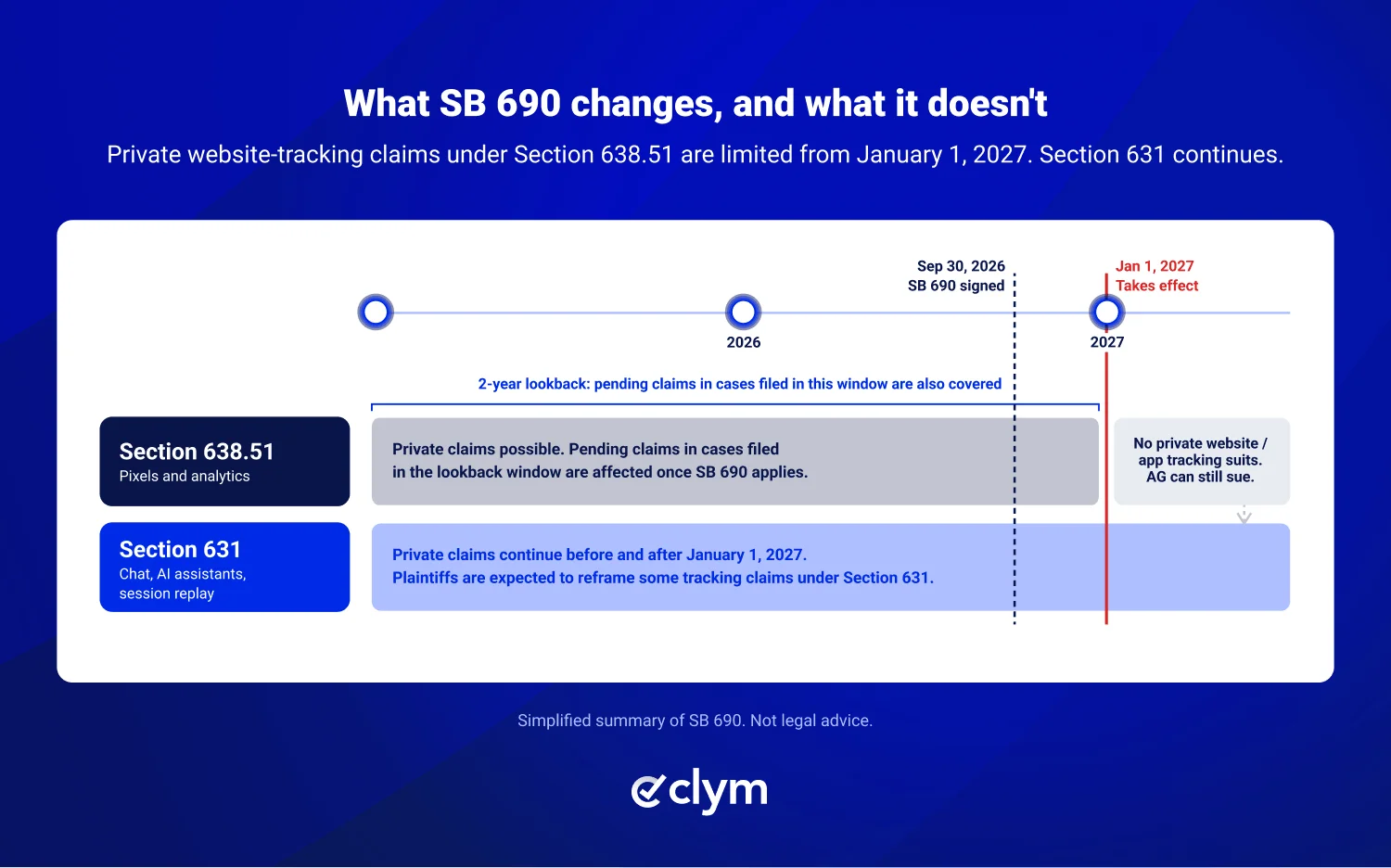
On September 30, 2026, Governor Newsom signed SB 690, which limits private lawsuits under Section 638.51 for website and app tracking. From January 1, 2027, only the California Attorney General can bring these claims against private businesses, and the change also applies to pending claims in cases filed within the two years before that date. Section 631 is unaffected, and plaintiffs are expected to reframe some tracking claims under it, so any letter citing either section still needs careful review with legal counsel.
Section 631 | Section 638.51 | |
|---|---|---|
What the claim alleges | A third party intercepted or read communications between your website and a visitor | A tool collected information used to identify or track a visitor or their device without authorization (a "pen register" or "trap and trace" claim) |
Technologies often named | Chat tools, AI assistants, session replay | Advertising pixels, analytics, other tracking scripts |
Records that help | Chat and session replay settings, chat consent records, vendor agreements | Tracker scans, consent logs, tag manager history |
Private lawsuits after SB 690 | Still available | Limited for website and app tracking from January 1, 2027. The California Attorney General can still bring claims. |
After receiving a demand letter but before removing a pixel, disabling a chat tool, or changing a consent banner, you should document the website's existing configuration.
Useful evidence can include:
These records can help establish which technologies were operating and how they were configured at the relevant time of the alleged violation.
For many website tracking claims, timing is critical.
Businesses may need to determine whether a tracking technology operated before or after a visitor provided consent. Consent logs can provide a historical record of those interactions.
Without those records, a company may have to reconstruct past website behavior using incomplete information.
How Clym can help: Clym's consent management platform records visitor consent decisions as consent receipts, and RealtimeCompliance™ can hold back tracking scripts until a visitor makes a choice.
For chat and AI assistant conversations, Clym's wiretapping consent collects consent separately and creates its own consent receipts. These records won't settle a legal question on their own, but they give your legal team dated evidence to work from.
A business receiving a CIPA demand letter may be tempted to immediately remove the pixel, analytics script, or chat tool named in the allegation.
That can create problems if you haven't preserved evidence of the original configuration.
Document the technology first. Save configuration records, export consent information, preserve tag manager history, and consult legal counsel before deciding what changes to make.
For the full response process, from keeping the letter to replying to the claimant, see our step-by-step guide to handling a website demand letter.
California is not the only state where website tracking can raise wiretapping-related claims. Similar lawsuits may involve laws in states such as Pennsylvania and Florida.
Accessibility claims are a separate category with their own evidence. If you also receive a letter about accessibility, see our guide to ADA demand letters.
For businesses using third-party tracking and engagement technologies, maintaining clear records of consent, vendor settings, and website changes can make future investigations significantly easier.
Disclaimer: This article is for informational purposes only and does not constitute legal advice. Clym is not a law firm and does not provide legal advice. Consult a qualified legal professional for guidance specific to your business.
CIPA lets a person seek $5,000 per violation, or three times actual damages if that is higher, under Penal Code section 637.2. Demand letters often build a settlement figure from that number. The amount in a letter is an opening demand, not a court award, so review it with legal counsel before you respond.
Not entirely. As of January 1, 2027, SB 690 bars private plaintiffs from suing under Section 638.51 over website and app tracking, and it also applies to pending claims filed in the two years before that date. Section 631 wiretapping claims are unaffected, so letters citing that section, or other states' laws, can still arrive.
Yes. Claims under Section 631 often target chat tools and AI assistants, alleging that a third-party vendor intercepted or read a visitor's conversation without consent. Asking for consent before recording a conversation, and keeping a record of that consent, gives you evidence of how the tool was set up at the time.
Not on its own. A banner helps only if tracking scripts actually wait for the visitor’s choice and you can show that later. CIPA claims often turn on whether a tool fired before consent, so script blocking, consent logs, and dated scans matter as much as the banner. Our guide explains why a cookie banner may not be enough on its own.

Chief Financial Officer
Michael is an experienced C-suite executive who has spent his career guiding organizations through an ever-evolving regulatory landscape. After starting his career at Ernst & Young, Michael worked as a CFO with large, global organizations before co-founding Clym to assist organizations of all sizes with their website regulatory compliance needs.